
FUNDING SUBMISSION | INTERPRETIVE SIGNAGE | PLACEMAKING
Glover Country Experience
THE SITUATION
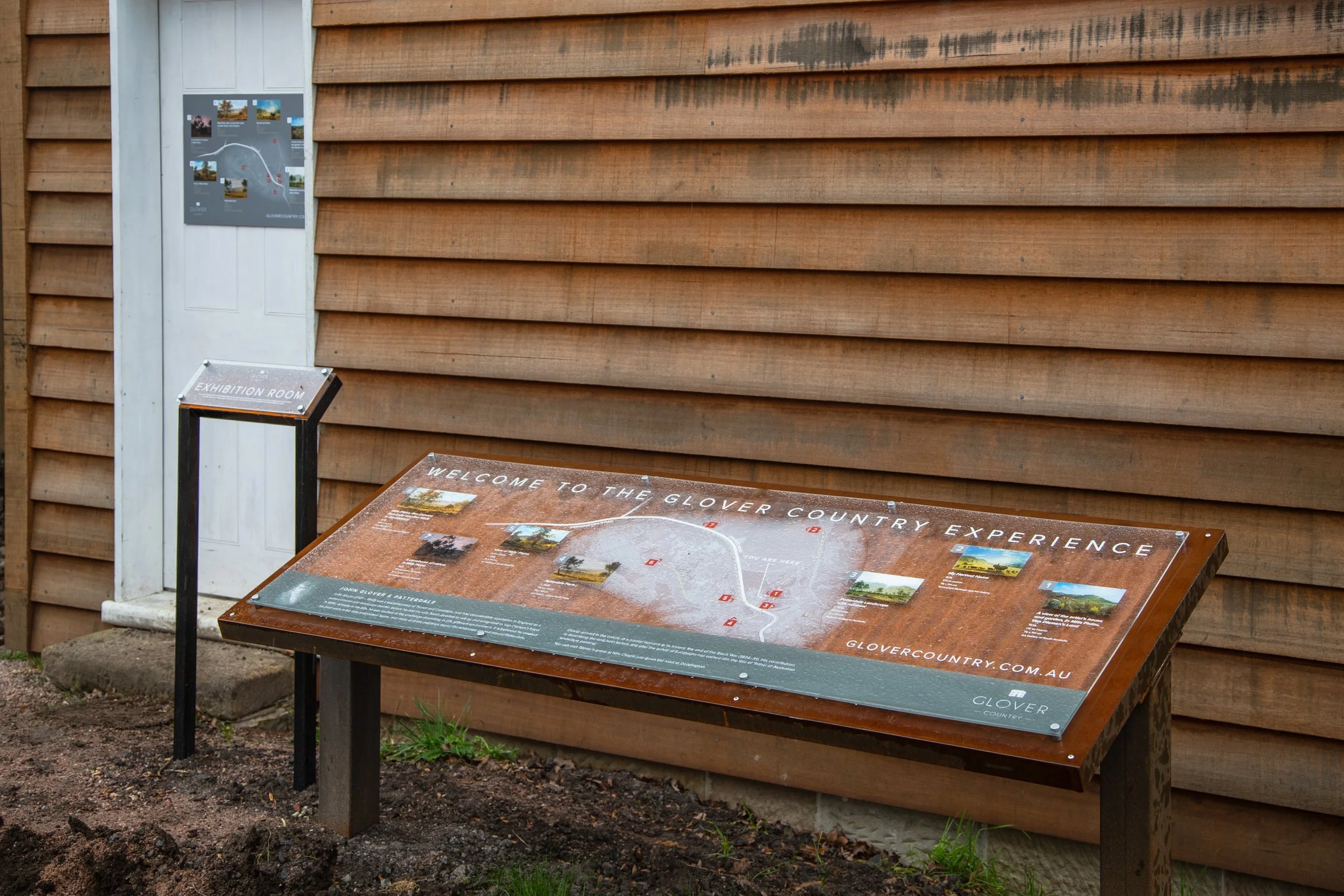
Stage 2 of the Glover Country Experience needed interpretive signage to connect visitors to the exact locations where colonial landscape artist John Glover set up his easel at the heritage-listed Patterdale property. The project came in two parts – first, getting the funding across the line, then actually making it happen.
WHAT WE DID
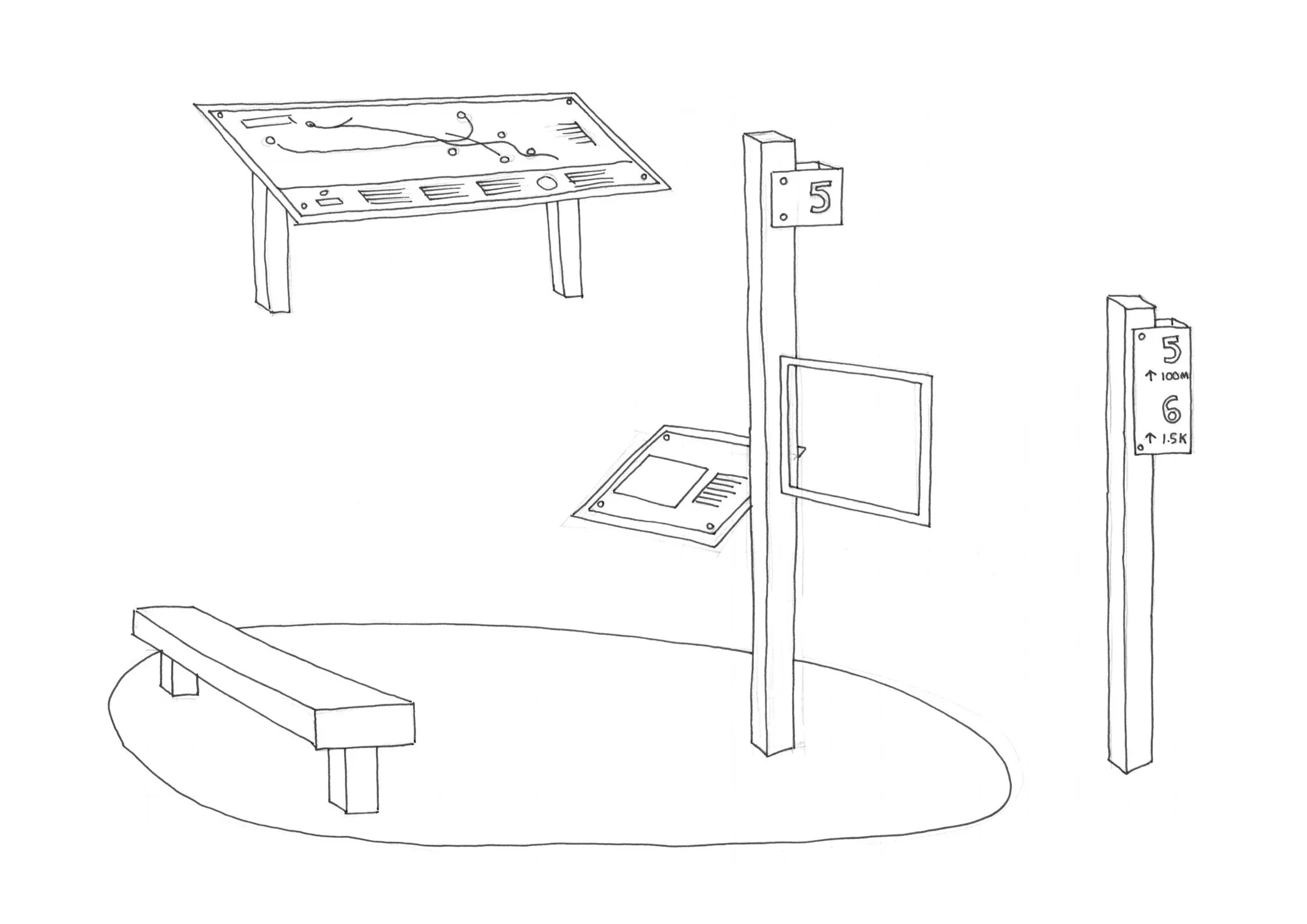
I led the team through a substantial and complex funding submission process – but of course it was the signage itself that was the most demanding and the most rewarding part of this project. This included numerous site visits (gumboots highly recommended – we were out in the paddocks in sideways sleet at one point), deep research into Glover’s life and work, careful material selection, and supplier liaison, all of which I managed personally.
The visual approach I developed had to balance heritage sensitivity with contemporary communication – respectful of the landscape and its history, but genuinely useful and engaging for visitors who might arrive knowing very little about Glover.
THE RESULT
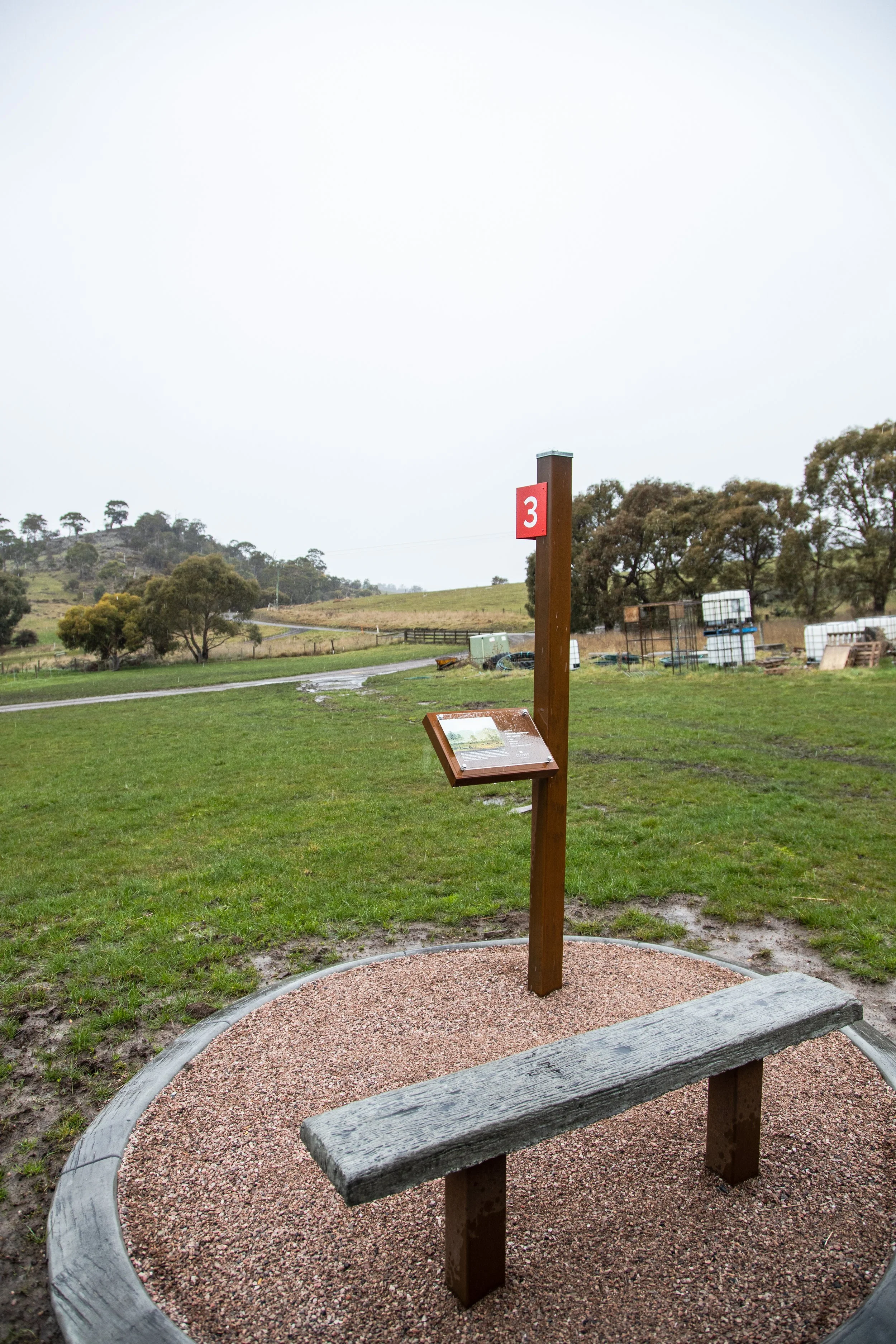
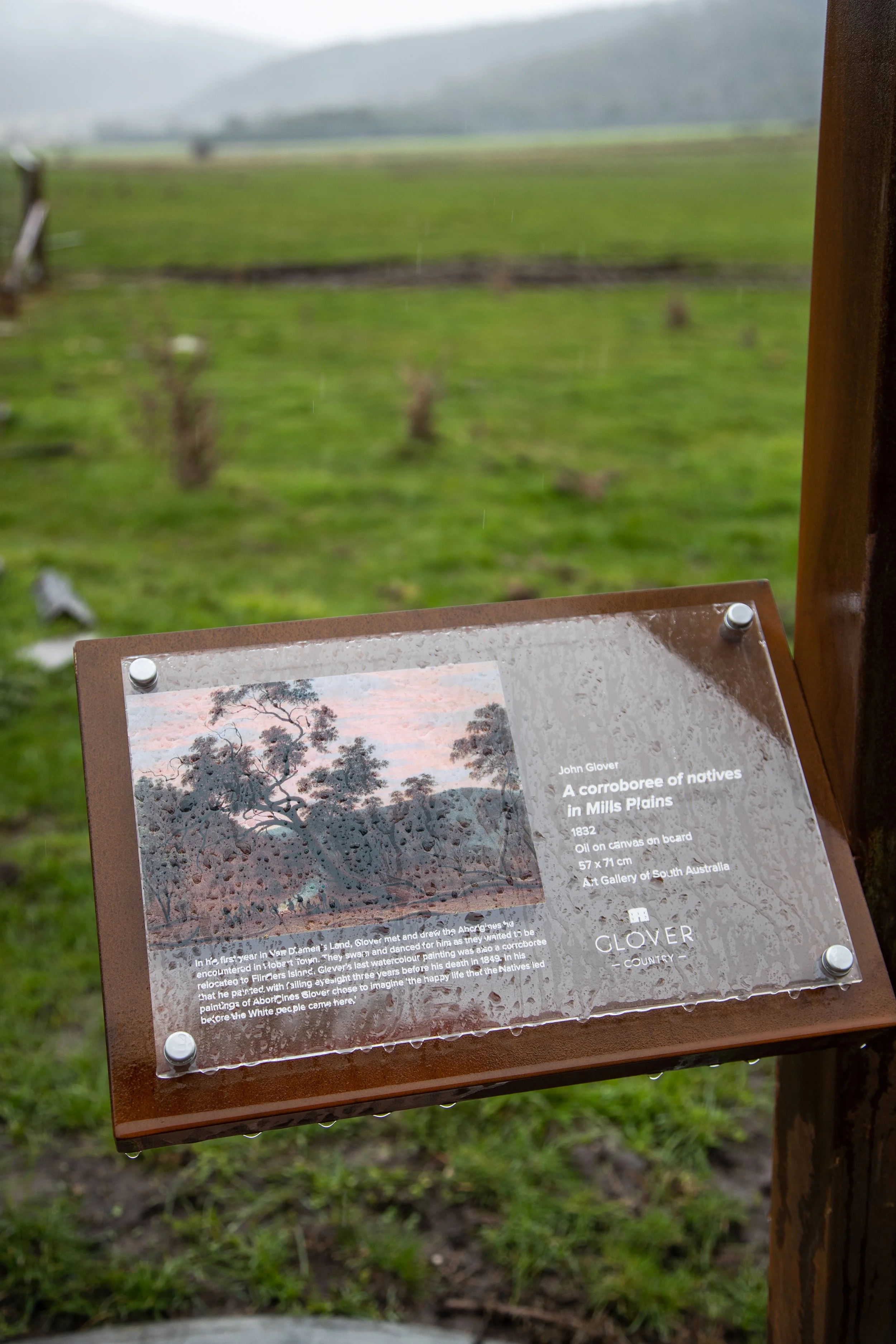
Patterdale was previously known as a farming property with John Glover’s restored home and studio – significant, but quietly so. The interpretive signage trail transformed it into an active cultural destination, giving visitors a genuinely new reason to make the journey. Eight vantage points, each connecting the view in front of you to a painting made on that exact spot nearly two centuries ago. When the signs went in and looked almost exactly like my original concept sketches, I was pretty proud. The sleet was worth it.